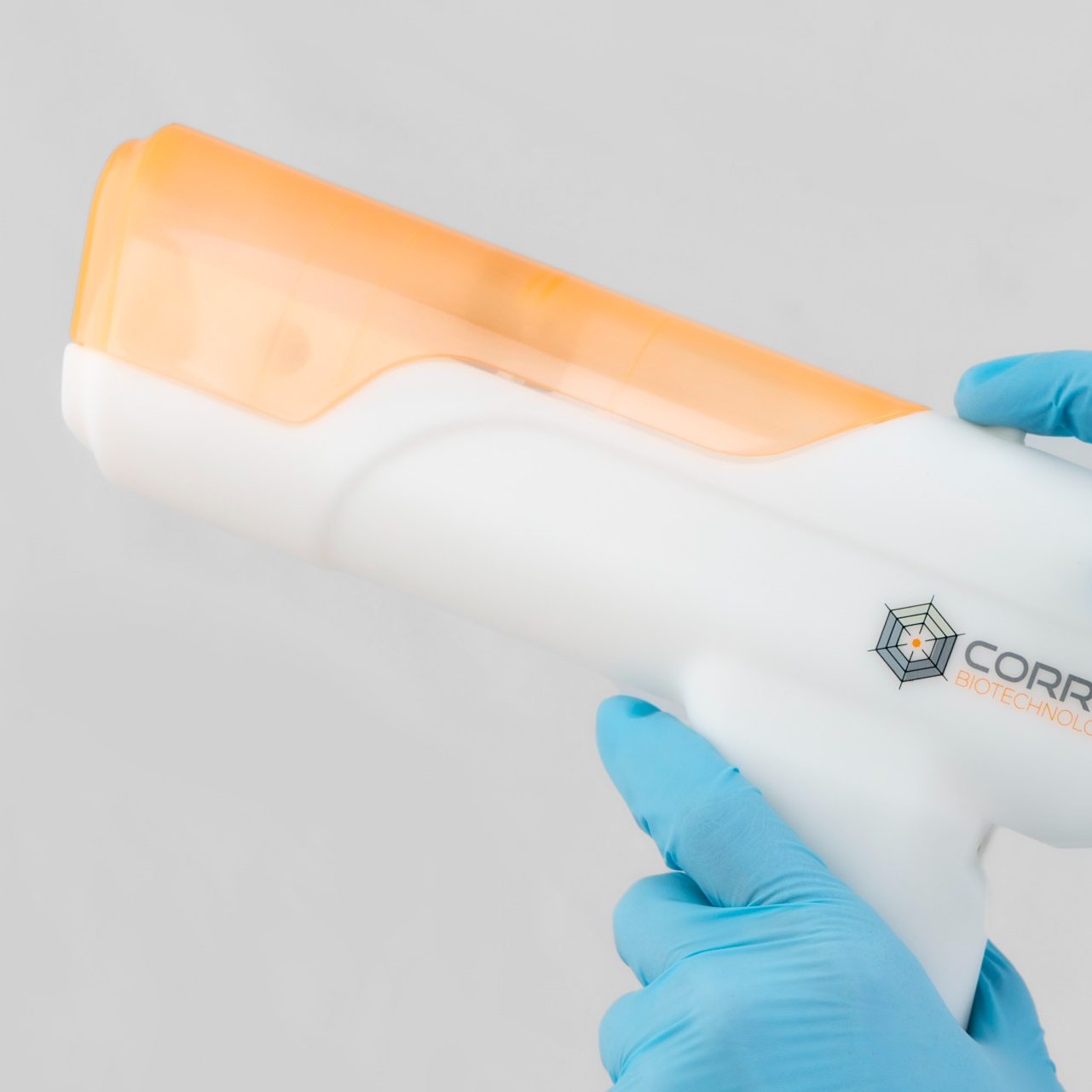
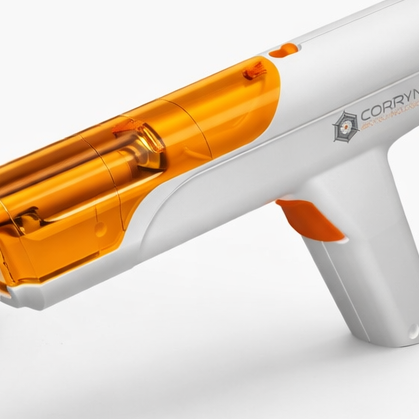
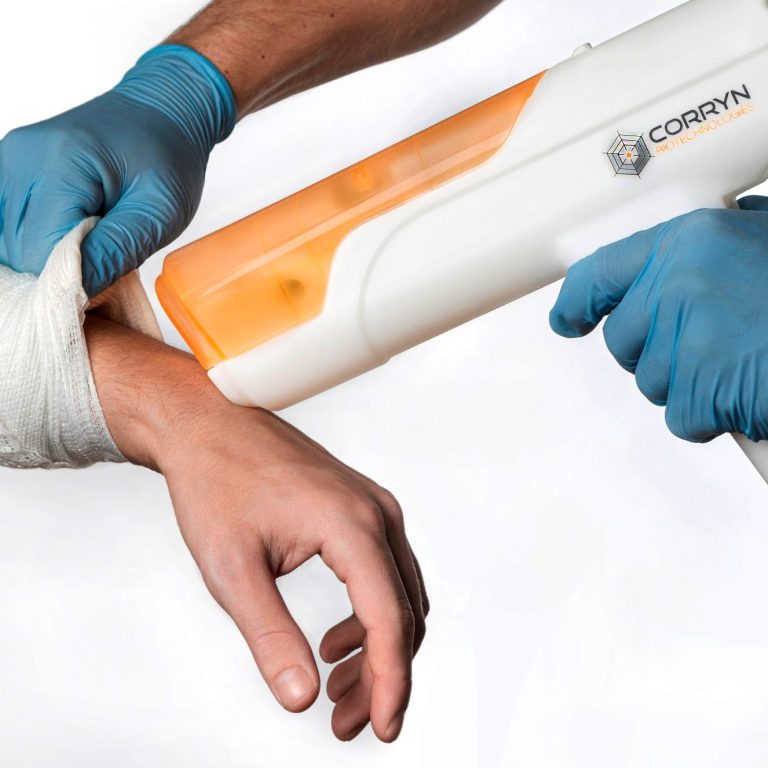
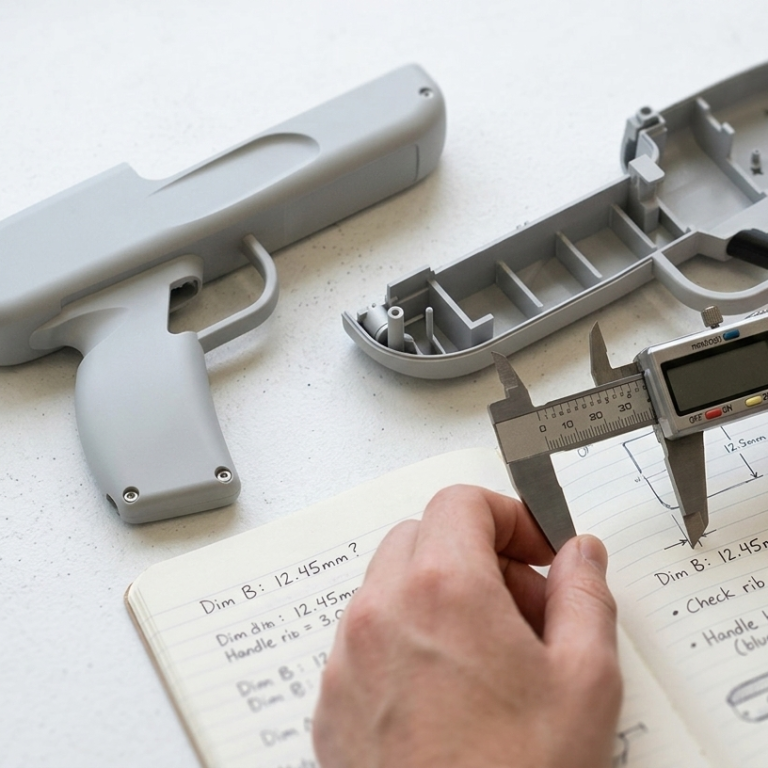
Supported by an Innovate UK grant, Corryn Biotechnologies began a project to reverse engineer an outdated prototype so it could be manufactured using biocompatible materials for testing. However, it soon became clear that the original design was unsuitable, leading the project to evolve into a full redesign to modernise and prepare the tissue repair applicator for current medical device standards.
Reverse Engineering
Corryn Biotechnologies had strict designations for the components required within the body of the device and had already established a successful, approved workflow. The objective of the project was therefore to transition from an outdated 3D-printed prototype that would not pass compliance testing to a design suitable for regulatory approval and production.
However, the limitations inherent in the existing design and Corryn’s desired performance outcomes became clear very quickly. As the device’s potential and the advantages it could deliver became better understood, the project rapidly shifted direction, evolving into a more comprehensive redesign and development effort in order to meet a tight delivery deadline.
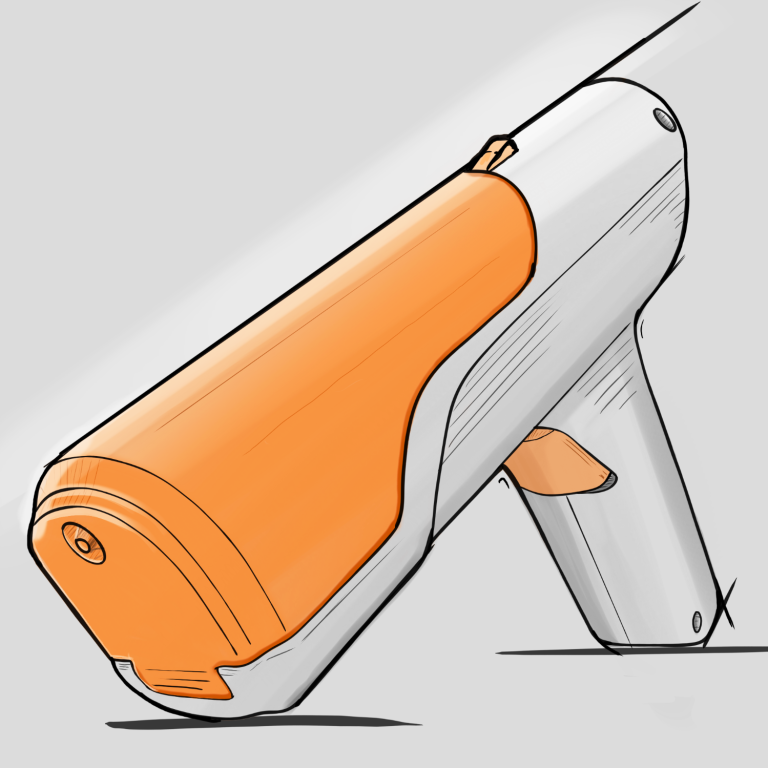
Redesign & Development
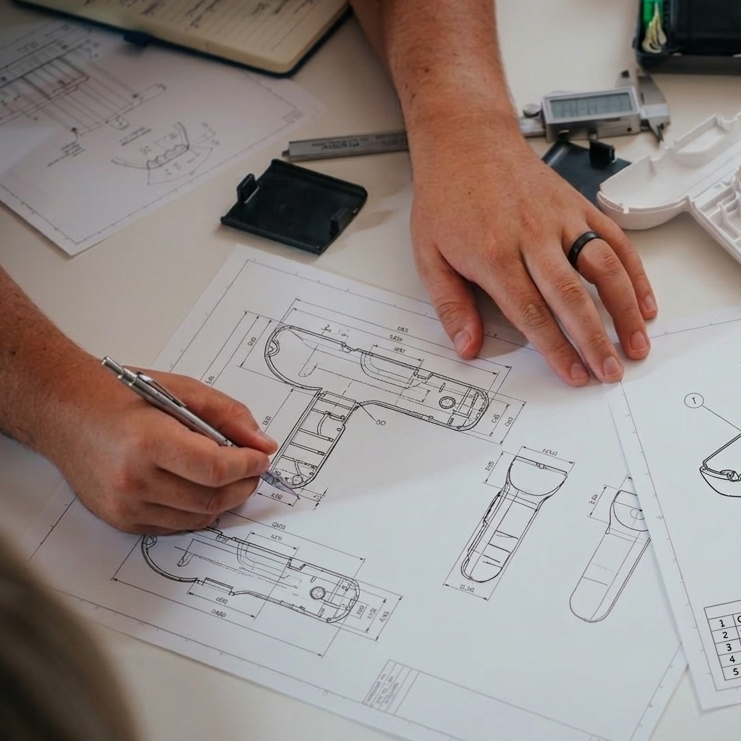
With the core concept of the device already established, development focused primarily on aesthetic refinements to ensure that previously completed testing remained valid and applicable.
The chosen direction introduced a modified fluid entry system, an adjusted internal component layout to improve weight distribution and balance, and an updated external enclosure that allowed the device to rest naturally when not in use. Incorporating the company’s signature colour-way added a distinctive visual accent, aligning the product with the brand’s broader design language and strengthening its connection to the company’s brand strategy. Ultimately with the aim fo removing features that would be costly to achieve.
Detailed Design
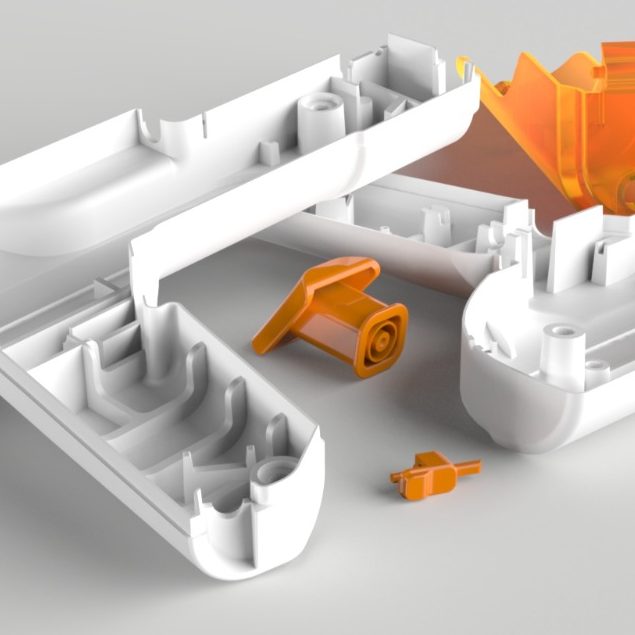
One of the primary criteria for the project was ensuring the device could be produced at scale using biocompatible materials. As a result, significant emphasis was placed on selecting manufacturing methods that prioritised production speed, efficiency, and material compatibility.
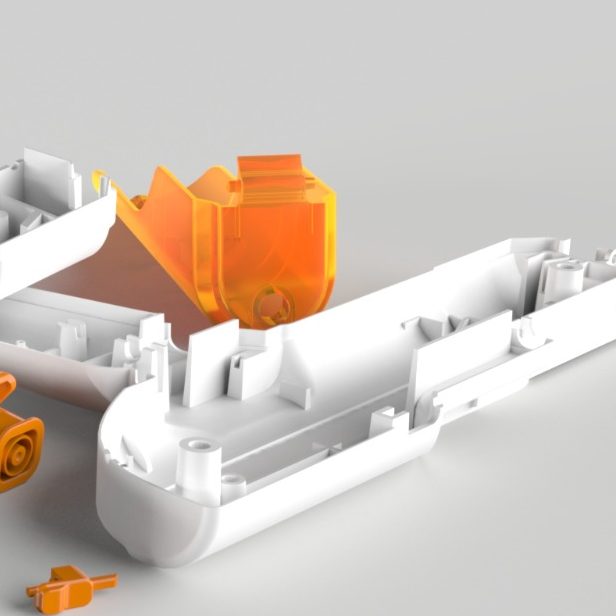
For low-volume production, the device was manufactured using vacuum casting. A blend of ABS and polycarbonate (PC) was selected to achieve the necessary balance of durability, finish quality, and compliance with biocompatibility standards.
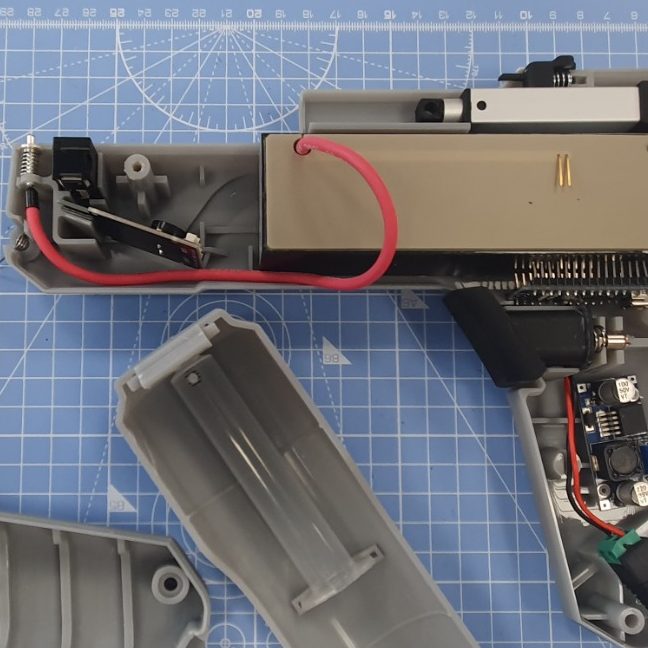
Electronics Integration
Corryn Biotechnologies had successfully developed the required electronic configuration prior to the commencement of this project. The system comprised a digitally controlled linear actuator, high-voltage power supply, battery, and barcode scanner, all interconnected through custom PCBs and user-operated switches that provide precise control over the dispensing process.
The objective of this phase was to integrate the established electronic system into the newly developed enclosures while preserving full functionality. This approach ensured that all existing compliance testing could be replicated without modification, maintaining continuity with the validated electronic architecture.
Production
Tooling for the components was produced using polyurethane (PU), with each part designed to be manufactured using a simple two-part mould. The geometry of the components was carefully considered to minimise the need for side actions, reducing tooling complexity while keeping both production time and associated costs low. This approach allowed for efficient manufacture while maintaining the dimensional accuracy and surface finish required for the final product.
Production was carried out internationally through specialist suppliers experienced in low-volume manufacturing. Once produced, the components underwent quality checks to ensure consistency and adherence to the required specifications before being packaged and transported to the client.
Final assembly of the device was managed and completed at the client’s premises in South Wales. This allowed the client to maintain direct oversight of the final build process, ensuring the finished devices met their internal quality standards and functional requirements before distribution.
Packaging
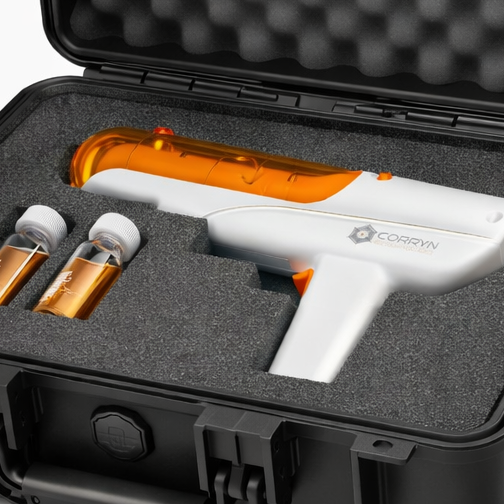
As the device utilised proprietary vials containing a polymer solution, it was imperative that both the applicator and its contents could be safely transported and securely stored when not in use.
A rugged transit case was therefore adapted to accommodate the device and its spare consumables. The interior featured custom-cut foam inserts to precisely house the applicator and replacement vials, protecting them from damage during transport.
The case also incorporated a multi-layered storage solution, allowing additional components such as the power supply and a small repair kit to be stored within the same enclosure. This ensured that users could transport and store the complete system in a single, organised package, with confidence that all necessary components were readily available when required.
All work shown on this page was undertaken whilst under the contractual employment of Corryn Biotech Ltd & ITERATE UK. All work shown, has been created independently or at the time of release on this portfolio website, had been launched and was within the public domain. The work is shown for personal portfolio presentation purposes only and must not be shared by any third parties. All opinions expressed are by the owner of the website and do not necessarily reflect those of Corryn Biotech & ITERATE UK.